
Total Synthesis of Garryine (Y. Qin, 2023)
Garryine (1, Figure 1) is a hexacyclic diterpenoid isolated from plants of the species of Garrya. It has a high density of consecutive stereocenters while at the same time only bear three functional groups. This makes the total synthesis challenging, and only racemic garryine could be synthesised in a lengthy synthesis before. In a 2023 published study in the journal JACS, Yong Qin and co-workers from Sichuan University (China) the first asymmetric total synthesis is described.
From a retrosynthetic approach (Figure 1), the piperidine-oxazolidine ring should be established in a late-stage CH-activiation and oxidation from precursor 2. This tetracyclic intermediate itself is available from unsaturated 3. Key-step of this route should be the stereoselective Heck coupling which introduces the stereochemistry on 3 from intramolecular coupling of 4. Finally, 4 should be available from two literature known fragments by challenging sp2-sp3 cross coupling.
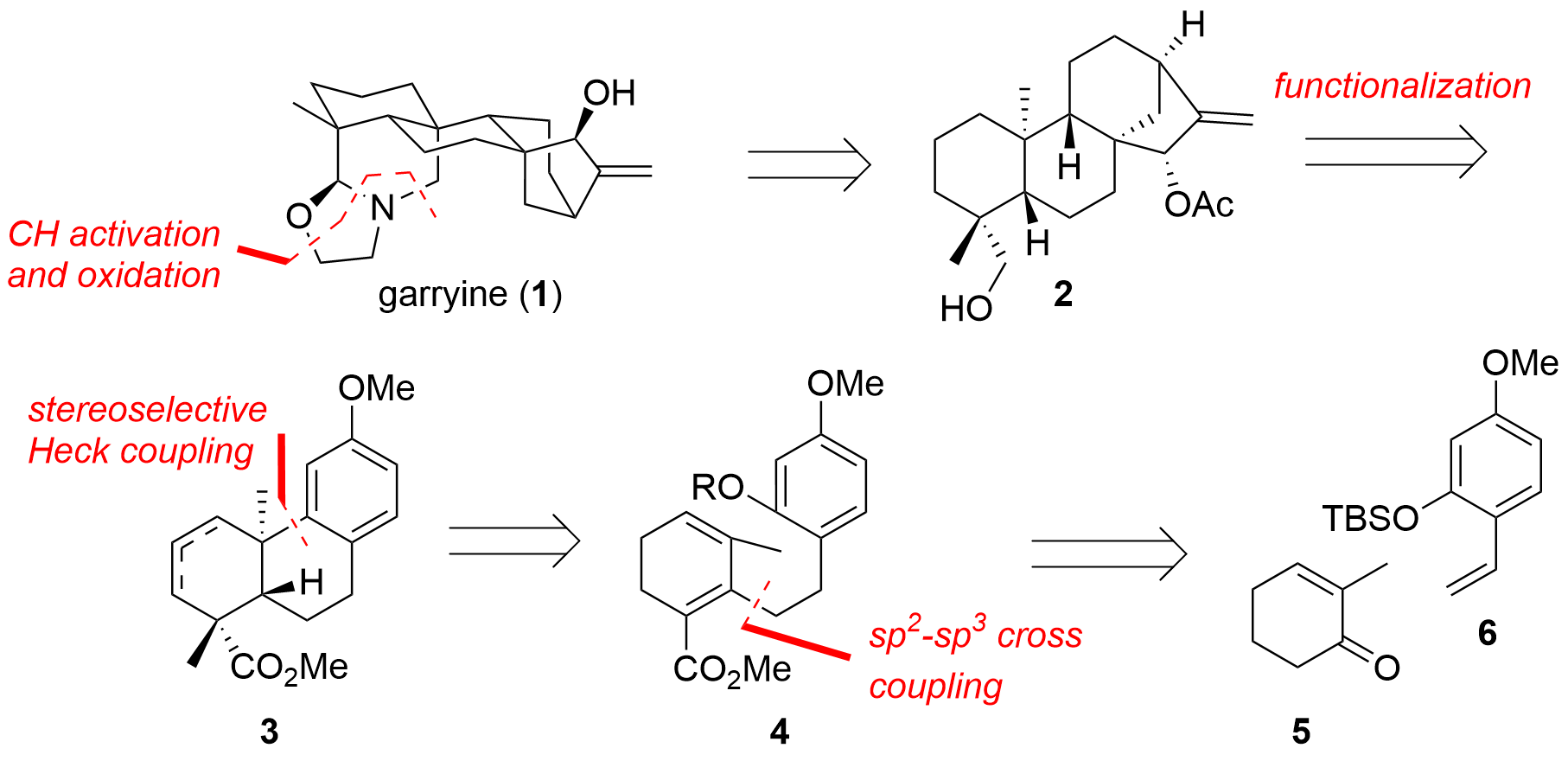
Figure 1: Retrosynthetic approach to the total synthesis of garryine (1).
Enantioselective Heck Coupling delivers key fragment 3
The synthesis started with cyclic enone 5 as shown in Scheme 1. Enolisation and and treatment with methyl chloroformate gave the 1,3-diketone, which was quenched with triflate yielding the desired coupling precursor 7 in good yield. Next, Suzuki-Miyaura coupling (for details see exercise 1 below) delivered 8 and deprotection and triflation successfully lead to coupling precursor 9. The intramolecular Heck reaction leading to the tricyclic system itself is already challenging as the de-triflation of 9 is observed as a common side product. However, also having a enantioselective access to 3 on top makes this reaction hard to achieve. The authors screened several conditions, catalyst and chiral ligands to finally establish perfect enantioselectivity combined with good yield. Desired tricycle 3 was synthesised in gram scale by using unusual fluorobenzyl as solvent with the chiral palladium ligand Cy-Meo-BIPHEP.
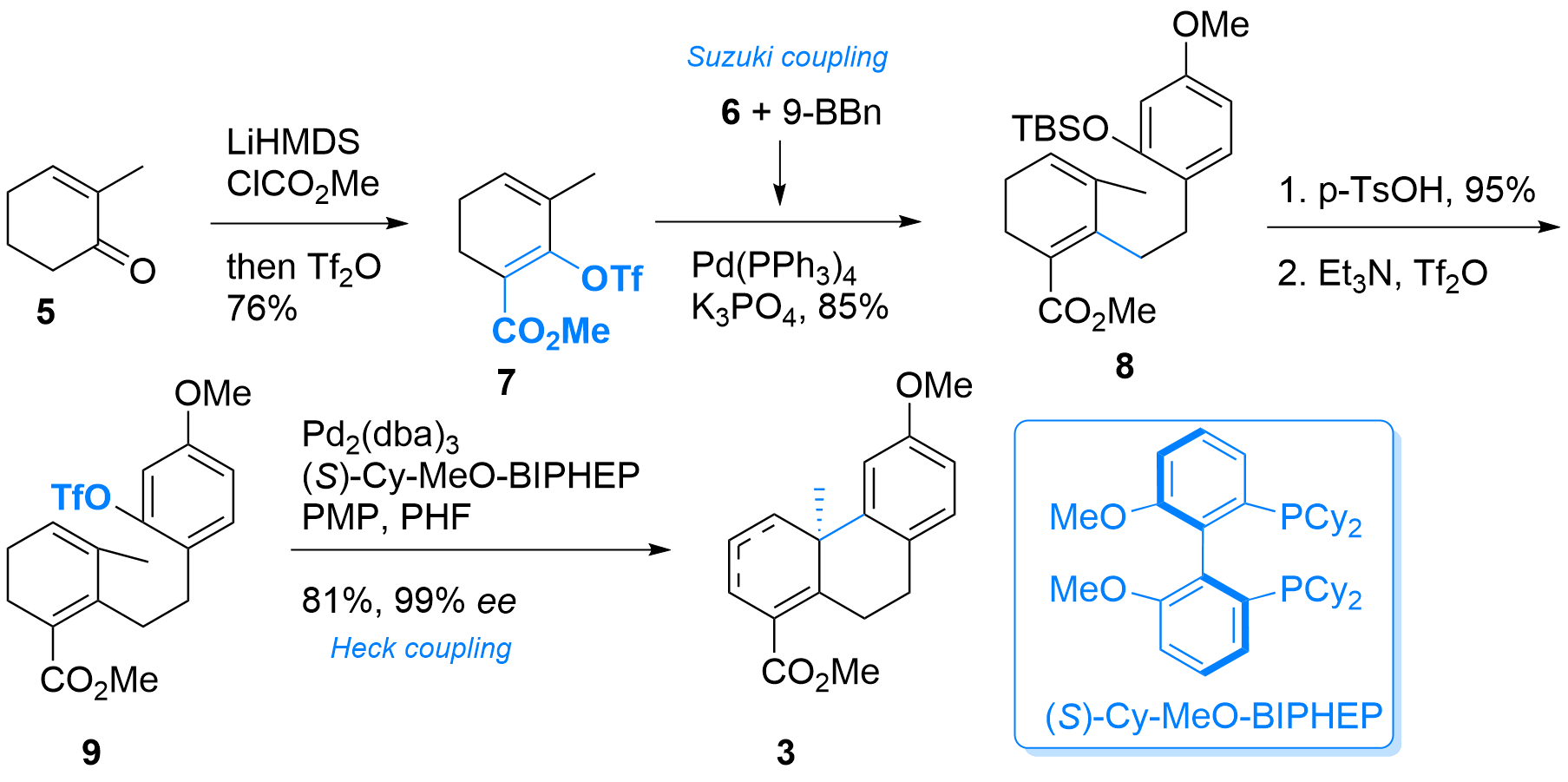
Scheme 1: Initial enantioselective Heck coupling delivers key scaffold for the total synthesis.
Functionalisation and Synthesis of the Tetracyclic Intermediate
Having established the synthesis of 3, a few synthetic steps were necessary to adjust the substitution pattern and to install the additional cyclopentane (Scheme 2). First, the double bond of in 3 was reduced and the resulting saturated ester was methylated in alpha position (for stereoselectivity see Exercise 2). Next, the aromatic ring was reduced using Birch reduction conditions to 11. The resulting double bond was then epoxidised and epoxide opening and Lewis acidic elimination gave unsaturated 12.
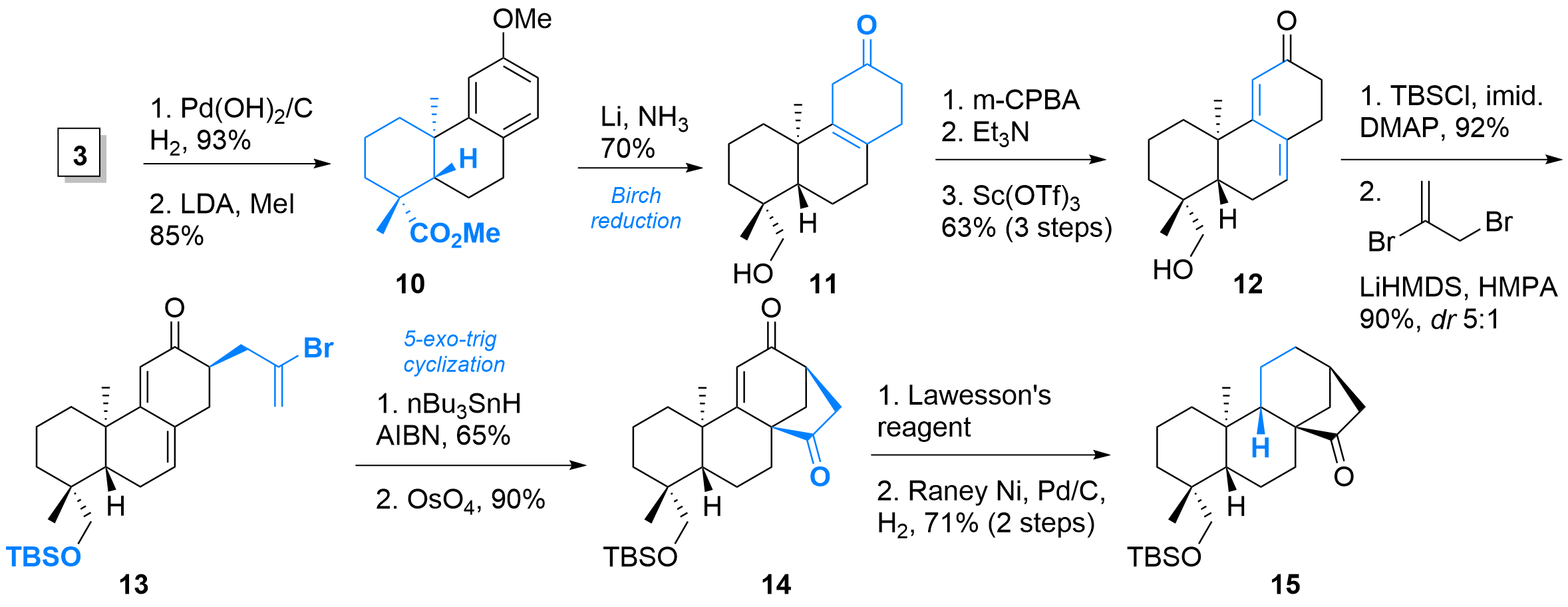
Scheme 2: Functionalisation and synthesis of the tetracyclic intermediate 15.
The primary alcohol was then TBS protected, which was followed by alpha alkylation of the ketone in high diastereoselectivity. Next, radical 5-exo-trig cyclisation was followed by oxidation of the exo double bond to the ketone 14. Lawesson's reagent transformed the carbonyl into the thiocarbonyl which was successively reduced to the saturated tetracyclic intermediate 15 in overall good yield.
Late-Stage CH-activation delivers Alkaloid Garryine 1
With 15 in hand, the ketone was methylated in alpha position, followed by enol-triflate formation and [Pd] catalysed protonation to 16. The Schenck-ene reaction is a reaction with triplet oxygen which forms in situ the hydroperoxide in a diastereoselective manner followed by immediate reduction with Me3P to 17. Of note, the functionalisation of 15 and simple reduction of the ketone delivered the wrong (ent)-17 exclusively. The resulting alcohol was protected as acetate while the TBS-ether was cleaved under acidic conditions to 2. Finally, CH-activation using Suárez' conditions gave the iodoaldehyde intermediate 18, which was transformed into the desired piperidine-oxazolidine by treatment with ethanolamine in sufficient diastereoselectivity. Finally, deprotection of the acetate delivered the final product 1.
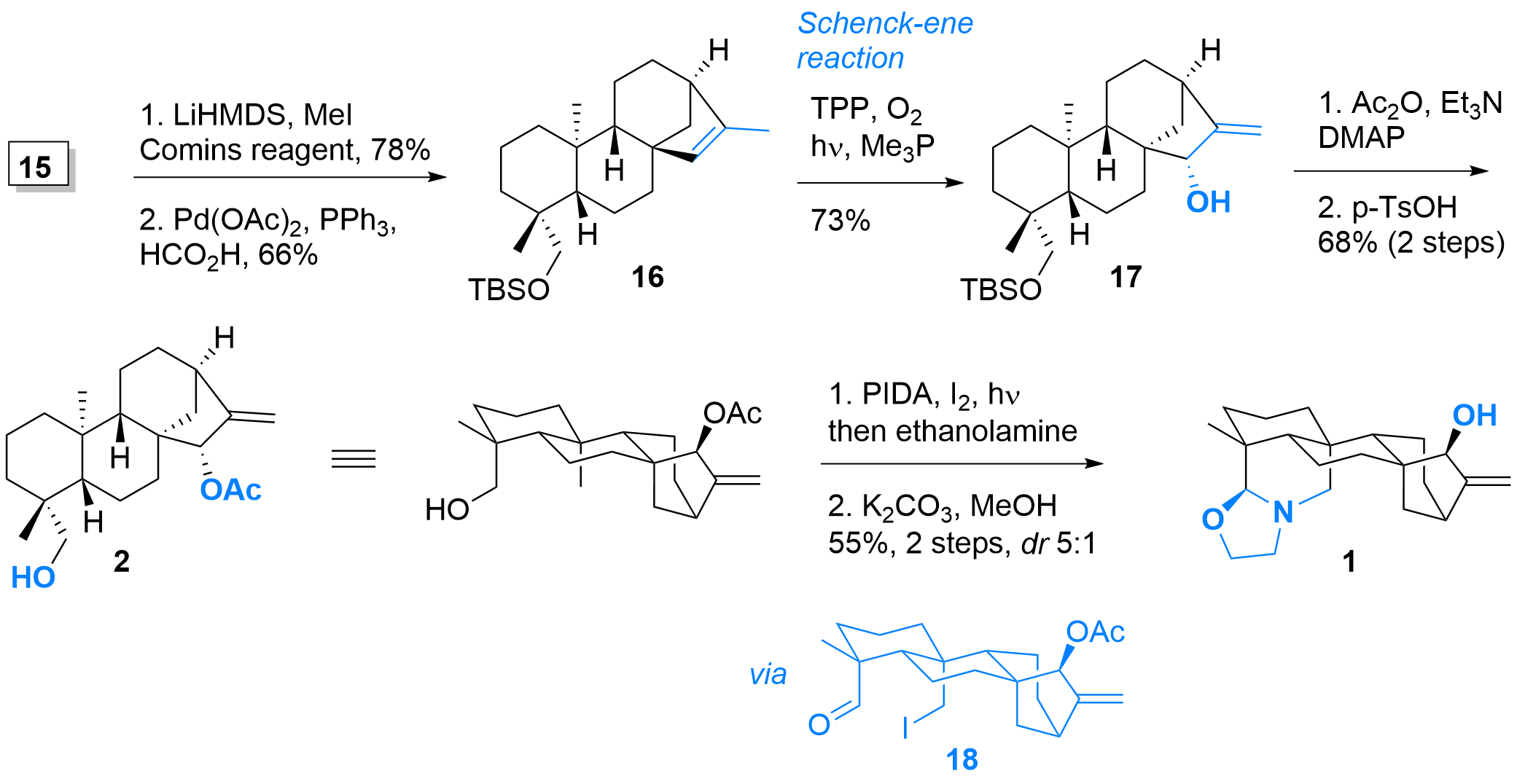
Scheme 3; Late-stage oxazolidine formation towards garryine (1).
Conclusion
In summary, Yong Qin and colleagues were able to synthesize garryine (1) in 24 steps from literature known compounds. The remarkable achievement of this total synthesis is the elegant usage of [Pd] catalyzed cross couplings for inter- and intramolecular fragment coupling. The enantioselective variant of the Heck reaction set the required stereoinformation from which all other stereocenters were built on. Furthermore, challenges in late-stage functionalisation, such as the diastereoselective formal reduction of the ketone 15, were overcome by innovative synthetic routes.
Exercises
Exercise 1: Mechanism of Suzuki-Miyaura Coupling
Draw the mechanism and catalytic cycle of the Suzuki-Miyaura coupling between 6 and 7.
Exercise 1: Solution (click to expand)
The reaction between 6 and 7 follows the typical catalytic cycle of [Pd] cross couplings (Scheme 3). In detail, oxidative addition of 6 with Pd(0) lead to organyl A. This intermediate reacts with organoboran B which is preformed by hydroboration of 7 with 9-BBN. Transmetallation will then give D which then forms the final product 8 after reductive elimination.
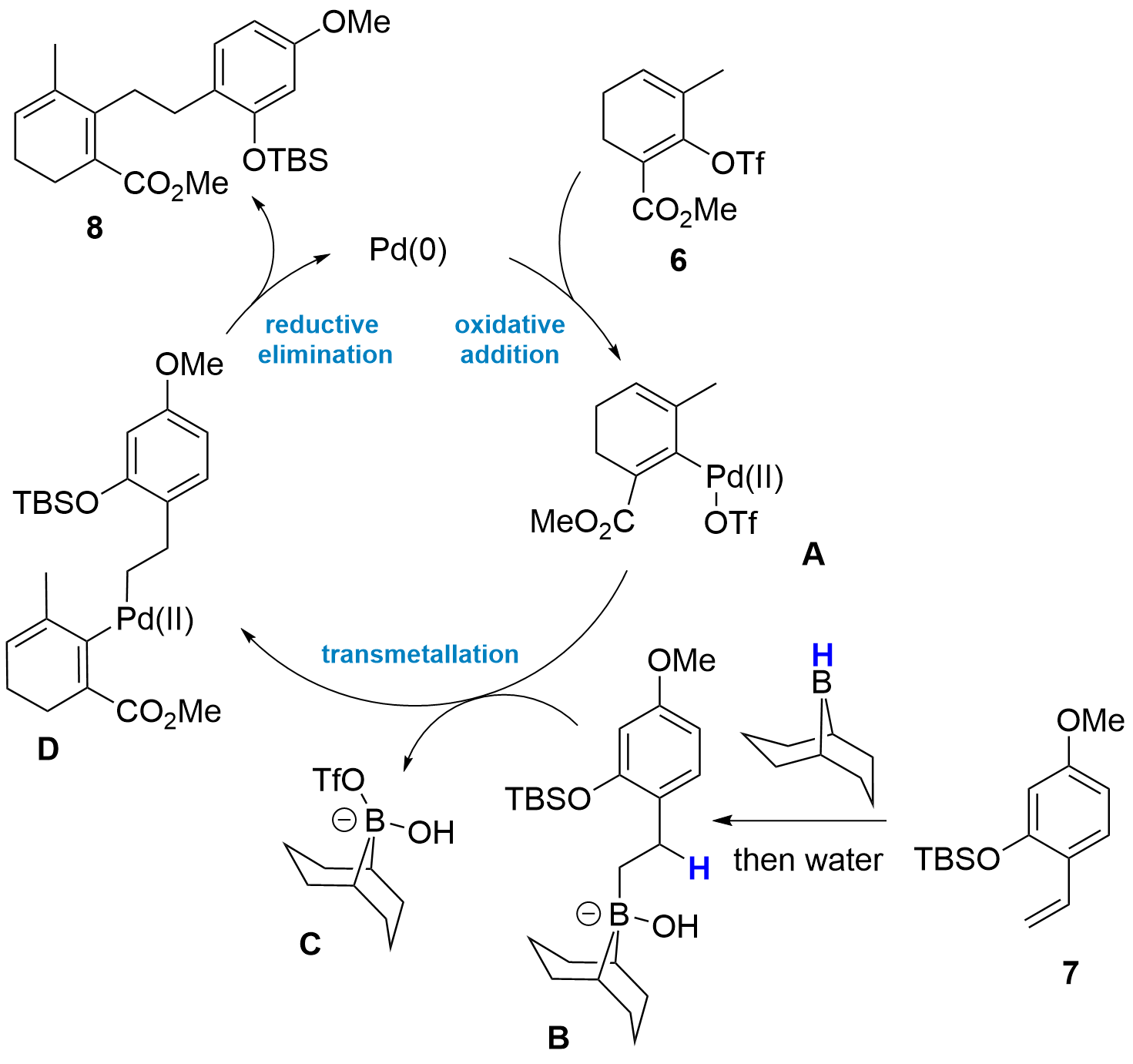
Scheme 3: Suzuki-Miyaura coupling of 6 and 7.
Exercise 2: Mechanism of Suzuki-Miyaura Coupling
Heck coupling product 3 is reduced to the saturated ester and then methylated. Explain the diastereoselective outcome of the methylation,
Exercise 2: Solution (click to expand)
After reduction of saturated ester A is formed as shown in Scheme 4. Enolate formation will then lead to B. While the steric hindrance from the lower side is significantly higher due to the methyl group. Therefore, the methylation takes place from the upper side and diastereomer C is formed exclusively.
Scheme 4: Diastereoselective alpha methylation.
Published in C. Li, F. Lu, Y. Cai, C. Zhang, Y. Shao, Y. Zhang, X.-Y. Liu, Y. Qin Journal of American Chemical Society 2023, 146, 1, 1081–1088. doi: 10.1021/jacs.3c12171